

Day 1
Arrive Bhuj · Heritage haveli
Fly into Bhuj. Settle into a Nawab-era heritage haveli. Evening walking tour of the Aina Mahal and Prag Mahal palaces.

Seasonal · Nov 2026 – Feb 2027
Once a year, when the monsoon rains have evaporated and the moon is full, the Rann turns into a silent silver lake-of-salt — and Kutch throws the desert a party.
Rann Utsav is a 100-day festival across November–February each year, anchored at the Tent City in Dhordo with a 30-minute drive on to the White Rann lookout. Our six-night journey stages it slowly: two nights in a heritage haveli in Bhuj, two in a community-run bhunga homestay in Hodka village, and two at the Tent City for the full-moon dinner-under-the-stars and the morning camel cart out into the salt flats.
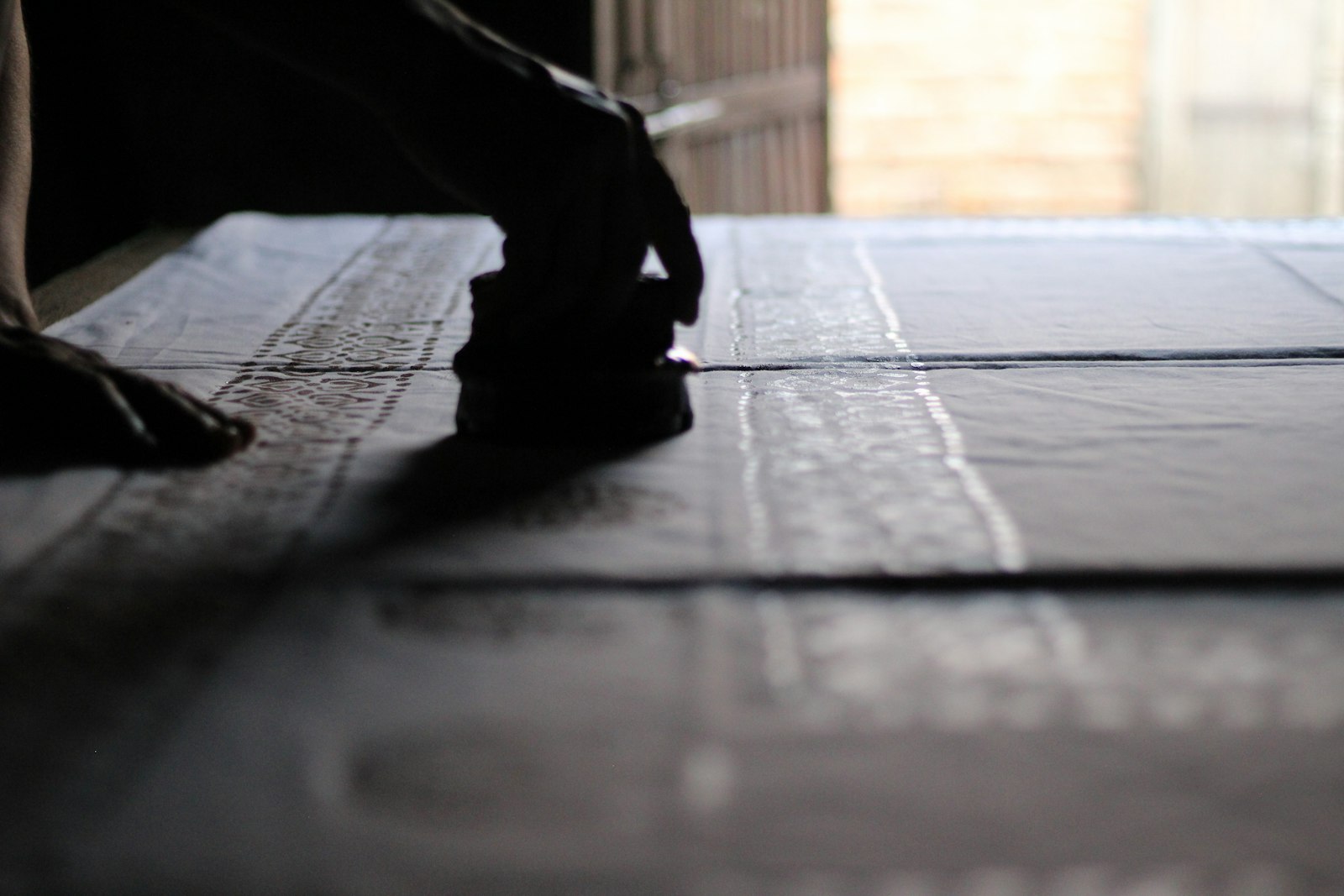
Beyond the festival, the deeper story is Kutch's living crafts: Ajrakh hand-block printing, Bandhani tie-dye, the Rogan painting of Nirona village (only three families practice it worldwide), the bell-metalsmiths of Bhuj. We visit working studios, never showrooms.
The closing flourish: a dawn drive to the Lakhpat fort overlooking the Sir Creek, the highest tide point of the Arabian Sea pulling into India.
Two nights in mirror-work bhunga huts owned and run by the Halepotra community.
Ajrakhpur, Nirona Rogan painting, Bhuj bell-makers. No showrooms.
110 % Gold-Standard offset; community lease fees built into the price.
Share this journey
Day by day
Day 1
Fly into Bhuj. Settle into a Nawab-era heritage haveli. Evening walking tour of the Aina Mahal and Prag Mahal palaces.
Day 2
Morning at the Kutch Museum and the Ramakund stepwell. Afternoon visit to Ajrakhpur — the bell-metalsmith Salim Wazir Khatri and the Khatri family of natural-dye Ajrakh printers.
Day 3
Drive north (1 hour). Move into a mirror-work bhunga homestay in the Halepotra community. Afternoon at the Hodka women's embroidery cooperative.
Day 4
Day-trip to Nirona village — visit Abdul Gafur Khatri's Rogan painting studio (only three families practice this craft globally). Afternoon at the Khavda potters and the Sumrasar mud-art.
Day 5
Drive to Dhordo Tent City. Welcome cultural-dance evening (Garba, Manganiar). Camel cart out to the White Rann lookout for the full-moon dinner-under-the-stars.
Day 6
Pre-dawn sunrise on the salt flats. Optional 4-hour drive to Mandvi beach + Vijay Vilas palace, or rest day at the Tent City spa.
Day 7
Sunrise drive to Lakhpat fort overlooking Sir Creek and the Arabian Sea. Onward flight from Bhuj in the afternoon.
In plain terms
Included
Not included
Common questions
Annually from 1 November to 28 February. Full-moon nights (Sharad Purnima, Kartik Purnima etc.) are the most magical and book out 90+ days ahead.
Very. The Tent City has proper plumbing, AC tents, paved internal roads and ramps. The 30-minute drive to the White Rann lookout uses 4x4 SUVs. Camel carts are optional.
A bhunga is a traditional circular mud-walled hut with a thatched roof, intricate mirror-relief artwork (lipan) on the interior walls. Our partner in Hodka has 8 bhungas with private en-suite bathrooms, solar power and a communal courtyard kitchen.
Layers — Kutch winter days are 22–28 °C, nights drop to 8–12 °C on the salt flats. Pack a fleece, a wind-shell, comfortable walking shoes, and a wide-brim hat. The White Rann reflects intense UV even in winter.
Keep exploring
Reserve a place
Tell us your preferred travel window (full-moon nights book out first) and party size — we'll come back within 12 hours with available bhunga rooms and Tent City categories.
Ready to reserve? Pay a deposit securely
Secure international checkout via PayPal (USD). Our concierge confirms your reservation within 24 hours.
Keep reading